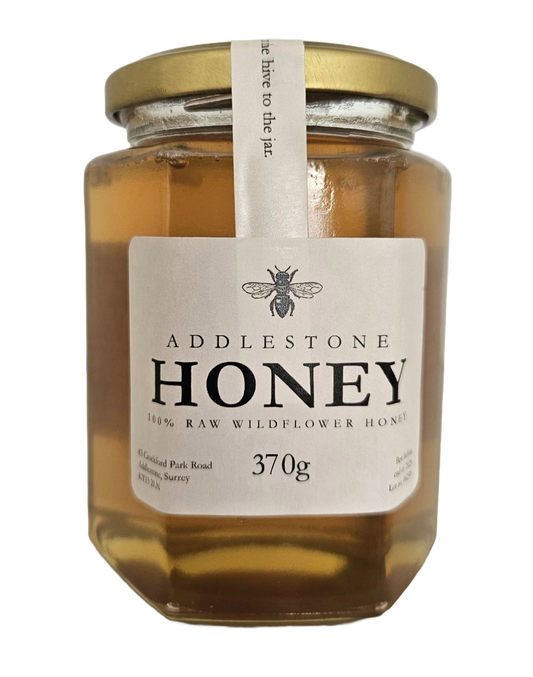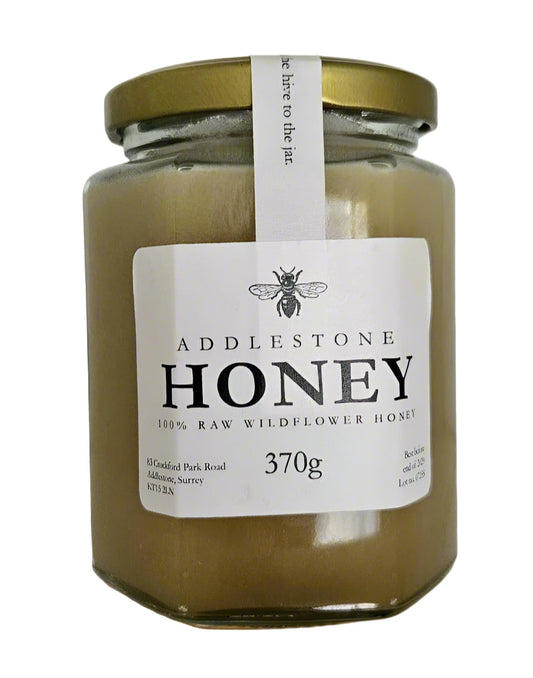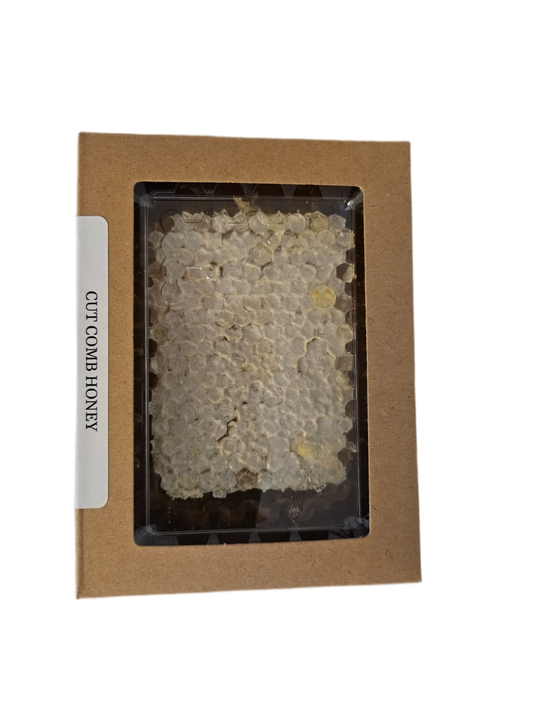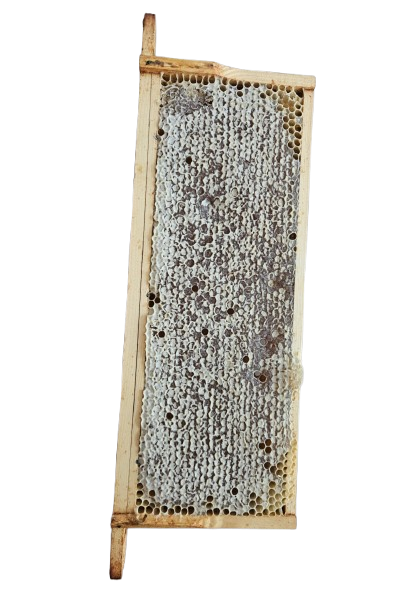
Natural, raw English honeys can consist of a range of different nectars and and other sources of sugars, like honeydew.

How honey's made
Honey bees mainly source natural sugars from flower nectar, produced by plants and trees.
Honey bees have a special 'honey stomach', where they temporarily store the nectar and which contains unique enzymes that break down the complex sugars into simple sugars, like maltose, Glucose and Fructose. The resulting honey is high in water content, which the bees reduce to below 18%, by fanning their wings over it as it sits in the wax honey comb.
Properties of honey

English honey consists of basic sugars: fructose (levulose) 35–48%, glucose (dextrose) 29–32%, maltose 5-8%, complex (higher) carbohydrates, fructose 1–4%. Meaning a total sugar content (glucose, fructose, maltose and sucrose) of 77–82%; with water making up around 18%, with 100g of honey typically containing around 350 kcal.
The properties of a particular honey will depend upon what the bees foraged upon. For example: Crocus nectar is very sucrose dominant, while clover and borage nectar have lots of glucose in them.
Pollen in honey
Raw, lightly filtered honey, typically contains tiny amounts of pollen, sometimes reaching 20,000+ grains per gram.
By weight, pollen typically makes up only 0.02% to 0.1% of the honey’s total mass.